
Securing society through seamless interoperability

The global security landscape is evolving rapidly, and we are witnessing how the impacts of geopolitical conflicts can directly affect the daily lives of citizens. We have entered an era where the traditional boundary between national defence and internal security, often referred to as green and blue forces, has become less separated. As modern threats cross these boundaries, the collaboration between our authorities must cross them as well.
At the heart of all mission-critical preparedness and rapid response is resilient, reliable communication. When vital data flows seamlessly from one agency to another, we do not just protect the public more effectively; we safeguard the lives of those who protect us.
But what does this interoperability mean in the field? Let us examine a scenario that illustrates the vital role of modern, hybrid critical communication solutions.
When the calm of everyday life is disrupted
It is a routine autumn morning. People are commuting to work, children are arriving at school, and the pulse of the city is calm. Suddenly, something anomalous is detected on the outskirts of the municipality: defence radars track a stray, potentially military-grade drone approaching a densely populated area.
This situation represents a textbook modern threat that demands exceptional, multi-agency collaboration. The danger itself is military in nature and tracked by the defence forces (green forces), but the potential evacuation of the residential area, traffic control, and civilian protection require the immediate mobilisation of police, fire, and emergency medical services (blue forces).
In these critical moments, technology often becomes a bottleneck. Defence sensors detect the threat, and the intelligence propagates through their secure internal networks in seconds. But how do we ensure that police and frontline responders also receive an accurate, real-time situational picture without delay, especially when their mission-critical communications operate on disparate networks?
Bridging the gap between siloed systems
A rapidly escalating situation leaves no time for relaying messages through intermediate command centres. It requires technology that operates without organisational boundaries.
This is where Agnet by Airbus bridges the gap. It is engineered precisely for these high-stakes environments, building a highly secure and resilient bridge between traditional Professional Mobile Radio (PMR) networks, such as TETRA, and modern, smart device-driven broadband networks.
With Agnet, critical intelligence from a defence monitoring post can be relayed with the push of a button directly to a police patrol's traditional TETRA radio and a rescue unit's smartphone. In addition to secure voice and messages for all, field users equipped with smart devices receive precise geolocation data, and even real-time video feeds flow seamlessly across networks. Disparate agencies now share a unified operational picture and can coordinate their response as a single, cohesive front, ensuring the threat is neutralised and everyday life remains secure.

A secure, phased transition to the future
Fortunately, modernising critical communications does not mean that proven legacy infrastructure must be overhauled overnight. Our Agnet TETRA solution offers organisations a controlled, risk-reduced pathway to transition from traditional narrowband radio communications to the expansive capabilities of modern broadband. Public safety and security agencies can deploy smart devices and advanced multimedia features to the frontline step-by-step, while maintaining absolute interoperability with their existing radio networks.
Download our Agnet TETRA brochure
Mitigating today's complex threats requires technology that dismantles silos, rather than building them. Societal security is a collaborative mission, and our commitment at Airbus is to provide the most resilient, future-proof tools available to support it.
Watch how Agnet enables seamless collaboration
Are you ready to elevate your organisation's mission-critical communications?
Never miss a single blog post
Receive new blog posts directly to your inbox.
Read more about this topic
-
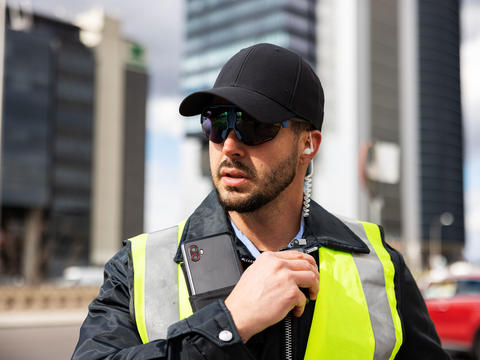
Devices and accessories for your broadband communications
Looking for mission-critical devices to improve operations? Introducing Airbus’ device certification service.
-

Agnet: The next generation of critical communication
Airbus’ Agnet solution is meeting the mission-critical communication requirements of the future with broadband 4G/5G connectivity.
-
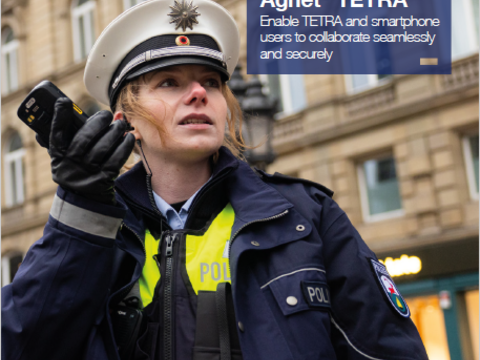
Download Agnet TETRA brochure
Enable TETRA and smartphone users to collaborate seamlessly and securely. This is hybrid communications at its best.
-
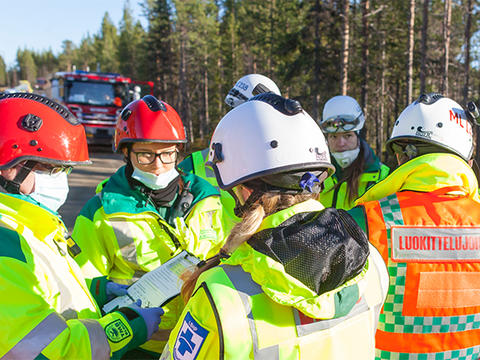
14 tips for smart device management success
How should organizations plan their professional smart device management before bringing devices and apps into use? Here are 14…


